
The first mistake people make with Bosnia and Herzegovina is trying to “complete” it like a normal travel route. They arrive with a list, usually written by someone who spent forty-eight hours in Sarajevo and left with strong opinions about coffee. The list has Baščaršija, Mostar Bridge, ćevapi, burek, maybe a mountain if the weather behaves, and then the traveller feels ready to explain the country to other people over dinner.
Bosnia does not reward that kind of confidence.
It looks small on the map, which is part of the trap. The distances do not look dramatic, so you think you can understand it in a few stops. Then you get in a car and realise the road is not particularly impressed by your plans. A short drive becomes a negotiation with a mountain, a river, a truck that seems to have been built before modern optimism, and a view so good that everyone in the car suddenly becomes a photographer.
One of the best ways to experience the country is exactly like that: slightly off schedule, slightly hungry, and with someone in the car saying, “It’s not far.” In Bosnia, “not far” can mean fifteen minutes, or it can mean a small examination in patience.
Sarajevo is the natural starting point, and for once the natural choice is the right one. But Sarajevo should not be treated like a museum corridor where you tick off sights and move on. The city opens better when you walk slowly enough to notice how the ground changes under your feet. In one direction, the old bazaar pulls you into copper, stone, coffee, smoke, grilled meat and narrow shopfronts. A few minutes later, the city changes clothes. The lines become more Austro-Hungarian, the buildings stand differently, and the streets feel less like an old market and more like Central Europe continuing a conversation.
This is where Bosnia becomes interesting.
It is more complicated and more human than the lazy brochure phrase “where East meets West.” In Bosnia, different centuries sit at the same table, and nobody seems entirely sure who ordered first. You can drink Bosnian coffee in a small courtyard, walk past Vienna-shaped façades a few minutes later, see socialist apartment blocks holding the hills, and then look up at mountains that make all human architecture feel temporary.
In Bosnia, different centuries sit at the same table, and nobody seems entirely sure who ordered first.
This is why I sometimes think of Bosnia as Europe’s small Mesopotamia. Not in the literal geographic sense, of course; nobody should start rearranging ancient maps after reading this sentence. I mean it more as a feeling: a country written between rivers, roads, empires, migrations, markets, mountains and stubbornly preserved habits.
Life here has layers. You do not need to enter politics or belief systems to feel that. It is enough to sit on the right street at the right hour and watch how many different worlds pass in front of the same café.
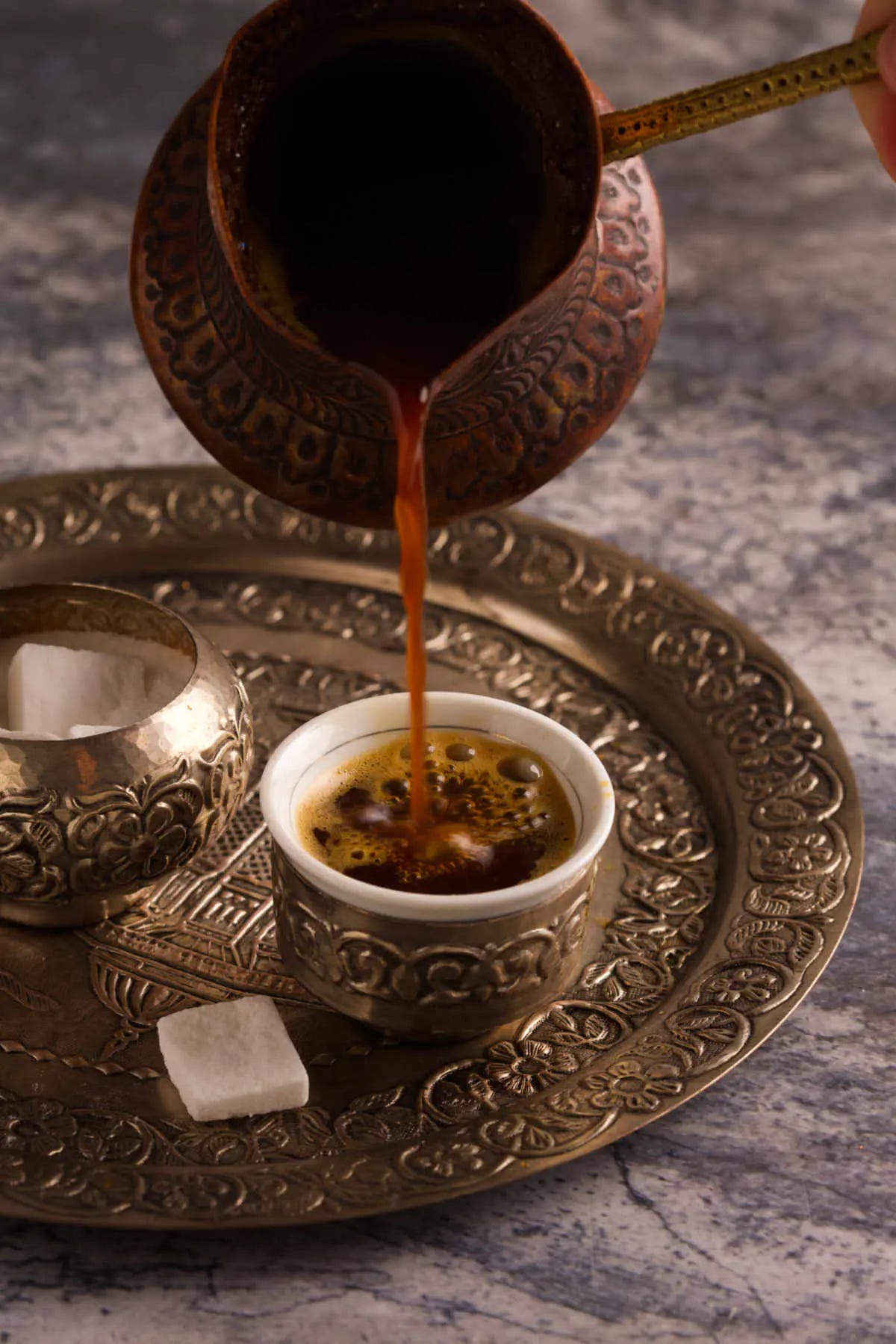
And yes, the coffee matters. Not because it is exotic, and not because every travel writer must eventually describe a copper pot as if it were a sacred object. Coffee in Bosnia is not only a drink; it is a permission slip for time. If you rush it, you look slightly ridiculous. You sit, you pour, you wait, you talk, you complain about something, someone joins, the subject changes, and suddenly your “quick coffee” has become a small chapter of the day.
A small warning: if you are the kind of person who says, “Let’s just have a coffee and go,” Bosnia may try to cure you.
Food works in a similar way. Ćevapi are not difficult to understand, yet people somehow manage to build a complete emotional system around them. Everyone has a favourite place, everyone knows why another place is overrated, and everyone is ready to explain this with the seriousness usually reserved for constitutional matters.
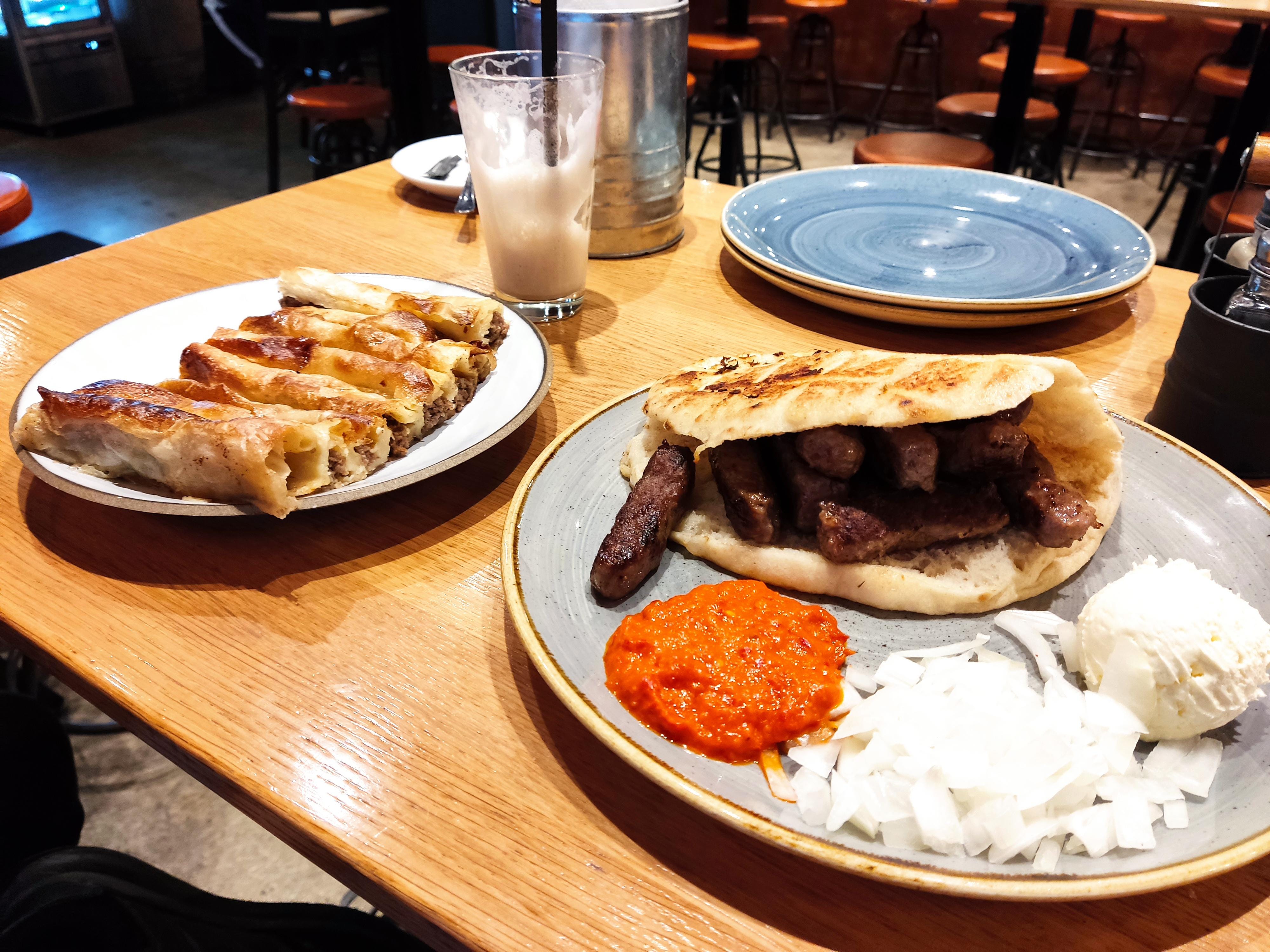
My advice is simple: eat where local people are eating, do not pretend one plate has made you an expert, and never start a sentence with “Actually, the best ćevapi are…” unless you have free time and a strong chair.
Burek is even more dangerous. In some countries, tourists use the word for every kind of pie because the internet told them life was simple. Bosnia disagrees. If it has meat, it is burek. If it has cheese, it is sirnica. If it has spinach, it is zeljanica. If it has potato, it is krompiruša. If you mix them up, nobody will arrest you, but someone may correct you with the calm disappointment of a person watching civilisation decline in real time.
These small food rules are fun, but they also point to something deeper. Bosnia is full of things that look simple from outside and become more specific the closer you get. A pie is not just a pie. Coffee is not just coffee. A road is not just a road. A town is not just a town. Everything has its local logic, and the country becomes much more enjoyable when you stop trying to flatten it.
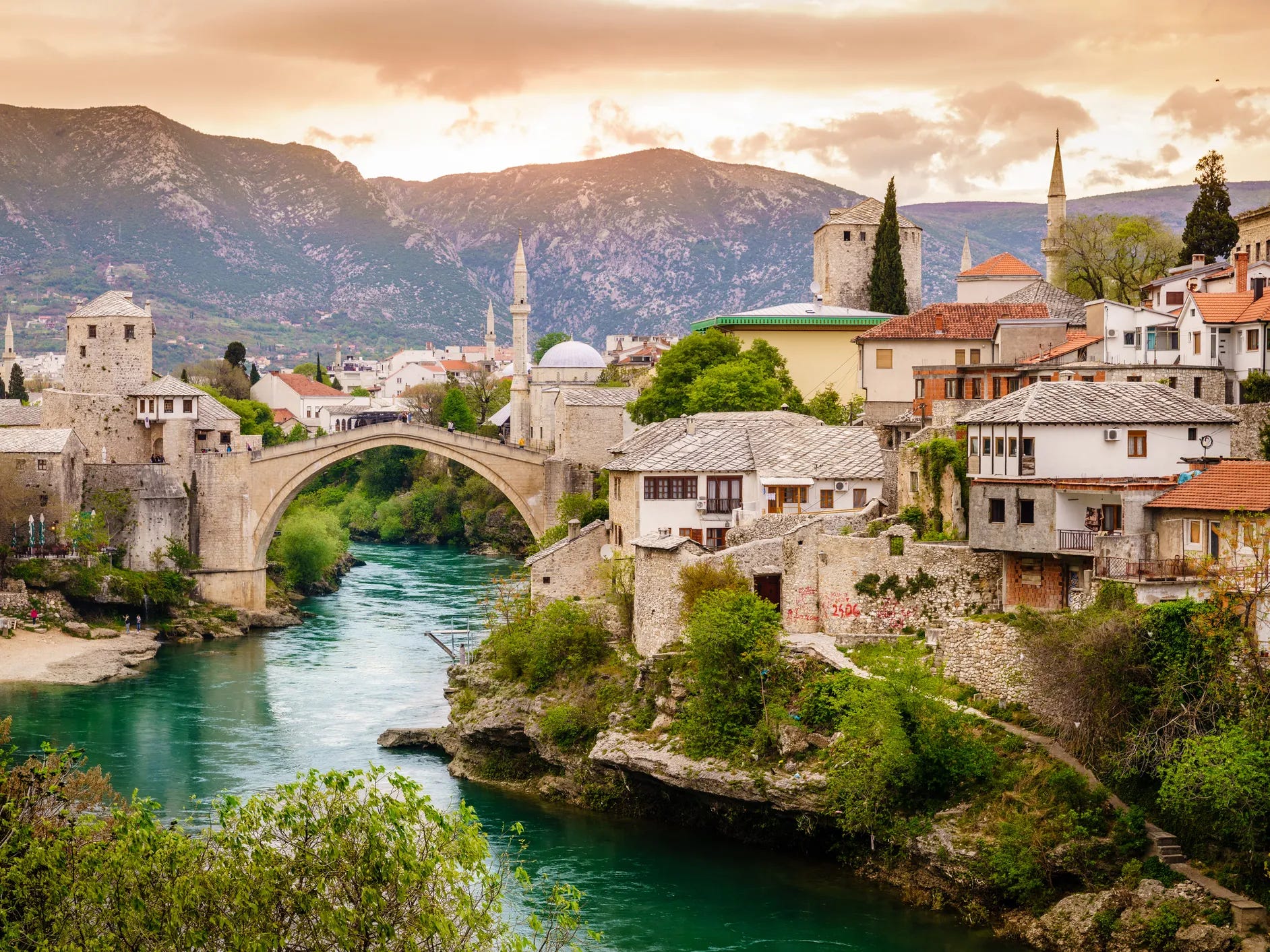
After Sarajevo, people usually go to Mostar; and they should. The Old Bridge deserves the attention it receives, even though the area around it sometimes surrenders to the usual crowding of famous places. The point is not to arrive at the bridge, take the same photograph as everyone else, buy a magnet and leave. Stay long enough for the light to change. Walk into the side streets. Look at the stone, the river, the stairs, the small terraces, and the way the heat sits differently there.
Mostar has a different temperament from Sarajevo. It is brighter, harder, more Mediterranean in its bones, and the Neretva beneath it looks as if someone adjusted the colour of the water specifically to embarrass your phone camera.
Blagaj, near Mostar, is worth the short trip even if it seems like part of the standard route. The cliff, the water and the calm of the place already do most of the work. It does not need a long explanation. Sit near the Buna, say something simple, or better, say nothing for a while.
This is generally a useful rule in Bosnia: when the river is doing a better job than you, it is wise to stop talking.
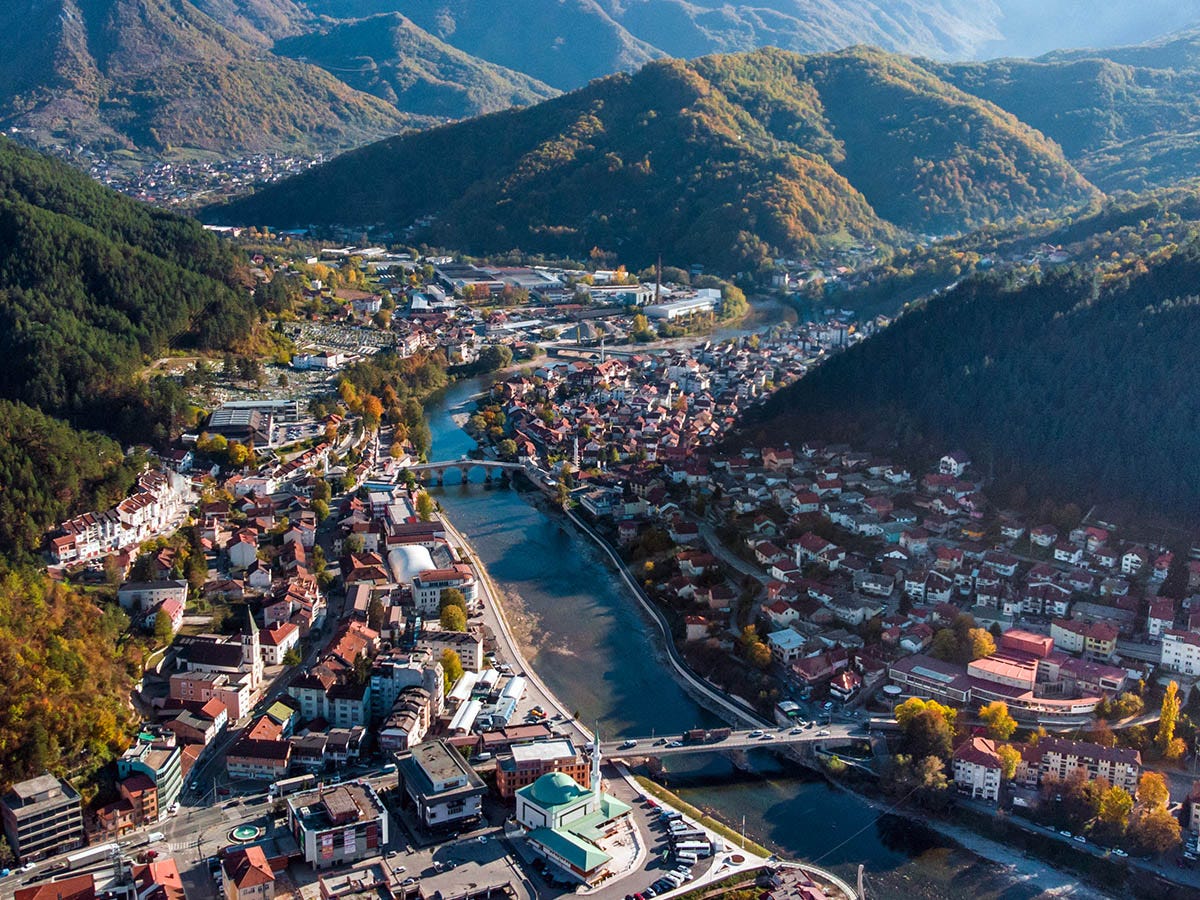
Konjic is another place that should not be rushed through. Many people treat it as a stop on the way to somewhere else, which is unfair. The town has a bridge, a river, rafting nearby, mountain air and a practical kind of beauty that does not ask for attention. It is also one of those places where you feel how deeply Bosnia is connected by water. The Neretva is not only something to photograph; it is a line that connects landscapes, towns and moods.
If you want the country to surprise you properly, you need to step a little outside the most obvious route. Jajce, for example, has a waterfall in the middle of town. That sentence sounds as if a badly organised committee became too creative, but nature somehow executed the idea beautifully. Nearby Pliva Lakes are calm enough to make you forget whatever nonsense your phone was trying to make urgent.
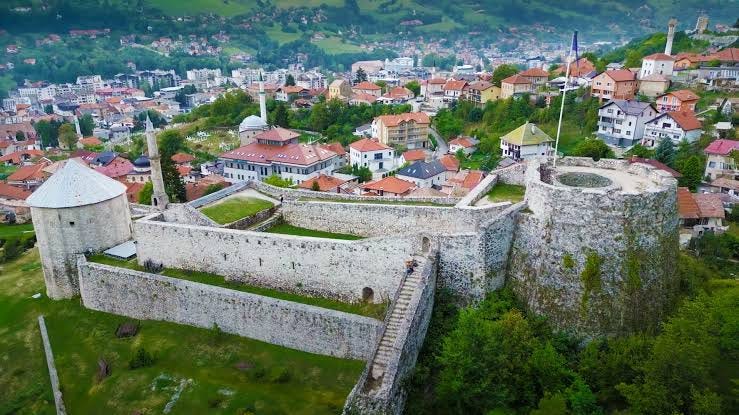
Travnik has its hills, history, coloured façades and a pace that can make even Sarajevo look almost impatient. Počitelj looks like it was built for painters with strong legs. Stolac carries stone, river, old streets and a quieter, less performed kind of beauty.
Then there is Una National Park. This is what happens when water decides to show off without becoming vulgar. If your idea of Bosnia is only Sarajevo and Mostar, Una will correct you. The waterfalls and river scenes there look almost unreal, but not in an artificial way. More like nature found a better setting and forgot to inform the rest of Europe.
The mountains are another chapter. Trebević is the easy escape from Sarajevo, especially if you want a view without pretending you have joined an expedition team. Bjelašnica and Jahorina offer completely different kinds of escape depending on the season. In winter, the country becomes more serious under snow. In warmer months, the mountains give you the strange pleasure of being close to the city while mentally far from emails, deadlines and people who say “quick call” without shame.
One of the things I like about Bosnia is that it does not force enjoyment into one category. You can have a slow food day, a river day, an old-town day, a mountain day, or a day where the main event is sitting somewhere too long and calling it cultural research. That last option should not be underestimated.
There are a few practical things worth knowing. Comfortable shoes are essential unless regretting footwear is one of your hobbies. Keep some cash, because not every beautiful place is interested in your card strategy. Do not overload the schedule, because Bosnia has a talent for punishing people who plan a holiday like project managers. If you want to understand the country beyond the main cities, renting a car is a good idea; but accept that the drive is part of the experience, not the boring space between experiences.
Most importantly, do not arrive expecting Bosnia to behave like a polished tourism product. That is not its charm. Its charm is that it still feels lived-in. Sometimes slightly chaotic, sometimes unexpectedly gentle, sometimes funny without trying, sometimes slower than your plan, and often more memorable than places that make a much greater effort to impress you.
If I were planning a first trip, I would start with two days in Sarajevo. Not only for the old town, but to feel the layers around it. I would add Trebević or Vrelo Bosne as a soft escape from the city. Then I would go through Konjic toward Mostar, stay long enough to see the city outside its busiest hours, and add Blagaj or Počitelj instead of rushing back immediately.
With more time, I would choose either Jajce and Travnik for a Central Bosnia route, or Una National Park for water, distance and the feeling of discovering another country inside the country.
That route will not make anyone an expert on Bosnia.
Good.
Bosnia is more enjoyable when you do not try to conquer it with expertise. Eat the ćevapi, but do not compress the whole story into them. Learn the difference between burek and sirnica, at least for your own safety. Drink the coffee slowly enough to let it do what it came to do. Follow the rivers. Leave room for the mountains. Allow small towns to interrupt your plan.
This country is not a checklist.
It is layered, stubborn, generous, occasionally confusing, and far more meaningful once you stop trying to make it simple.