
When July 11 arrives, something changes in the human voice.
Some days stand on the calendar, but they are not only dates. They slow people down. They reduce unnecessary words. They lower the gaze. Srebrenica is such a day. It is more than a commemoration. It passes through the silence of a cemetery, the waiting of a mother, the door of a home that was never completed, and the name of a father a child never had the chance to know.
To remember Srebrenica is not only to remember a genocide. It is also to remember one of the hardest questions a people must ask itself: Who will we remain after this pain?
Because genocide is not directed only at lives. It is directed at memory. At names, language, homes, families, graves, prayer, neighbourliness and the future. It does not only want to kill a people. It wants to separate them from their own story. It waits for those who remain to become tired, silent, accustomed, and eventually ashamed of their own past.
That is why the heaviest duty after Srebrenica is not only mourning.
Mourning is necessary. It must exist. But mourning alone is not enough to keep a people standing. Mourning must become memory, memory must become consciousness, and consciousness must become life. Otherwise pain remains only a heavy stone carried in the heart. One day, that stone must become a home, a school, a book, a business, an institution, a family discipline and economic strength.
Because remembering is not only crying. Remembering is deciding not to lose yourself.
One of the most important responsibilities of Bosniaks today is exactly this: not to forget their origin. This does not mean closing themselves inside the past. It does not mean cutting themselves off from the world, living through anger, or turning everything around an old wound. To remember one’s origin means knowing where one comes from, what one has survived, what price was paid to remain standing, and what values must be carried to the children.
A people’s origin does not live only in genealogy. It lives in language. It lives at the family table. It lives in the name given to a child. It lives in the stories told by elders. It lives in the dignity shown when visiting a cemetery. It lives in the promise given in business. It lives in the discipline of remaining human even in weakness.
If Srebrenica is taught to new generations only through numbers, it will be taught incompletely. Numbers are necessary. Dates are necessary. Documents are necessary. But human stories are necessary too. A child should not only know how many people were killed. He should understand that a father did not return home, that a mother waited for years, that a brother grew up with an empty chair beside him. History becomes distant when it remains only inside textbooks. It takes root when it is spoken at home, shown at the cemetery, told through names and lived through behaviour.
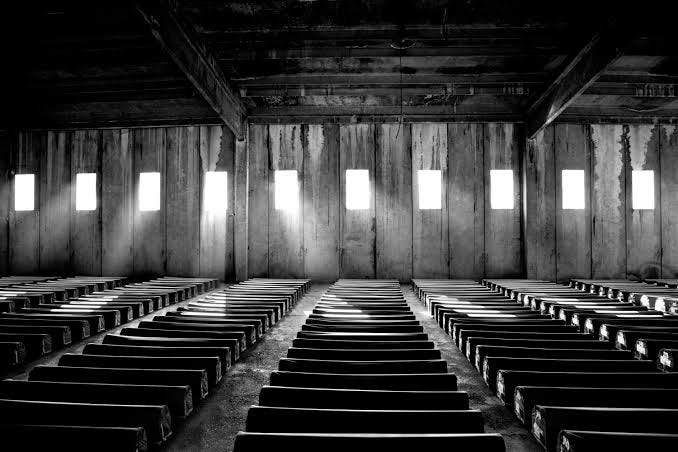
A people must teach its children not only what happened to them, but how to stand after what happened.
That is why teaching Srebrenica is not only the responsibility of commemorations. It is the responsibility of the family. The school. The businessperson. The writer, the teacher, the imam, the mother, the father, the grandfather, the grandmother, the shopkeeper, the student. Because memory weakens when it is not institutionalised. Pain carried only by emotion becomes tired over time. Memory carried by institutions, education, production, culture and discipline remains standing even when generations change.
Bosniaks must also see unity not as a romantic slogan, but as a vital need. Unity does not mean that everyone must think the same. It certainly does not mean that everyone must belong to the same party, family, circle or class. Unity means not surrendering great matters to small calculations. It means not consuming one another, not pulling one another down, not suffocating talented people with jealousy, not weakening common institutions, and learning to trust the work of one’s own people.
Sometimes a people is exhausted not only by external attacks, but also by internal disorder. Small calculations, endless resentments, unnecessary conflicts, distrust of institutions, discomfort with one another’s success. These slowly produce an invisible weakness. One of the hardest truths Srebrenica teaches is this: the pain of a scattered people remains more defenceless.
Unity is not only standing under the same flag. Unity is being able to stand patiently behind the same school, the same foundation, the same company, the same media platform, the same cultural institution and the same economic goal when needed.
That is why economic independence is not only about money. It is about dignity.
A people that remains economically weak often has to look to others even to tell its own story. It struggles to strengthen its schools, support its media, open opportunities for its youth and have a voice in its own land. That is why building businesses, producing, trading, accumulating capital, educating young people well, giving them professions and raising people who can compete with the world are also part of memory.
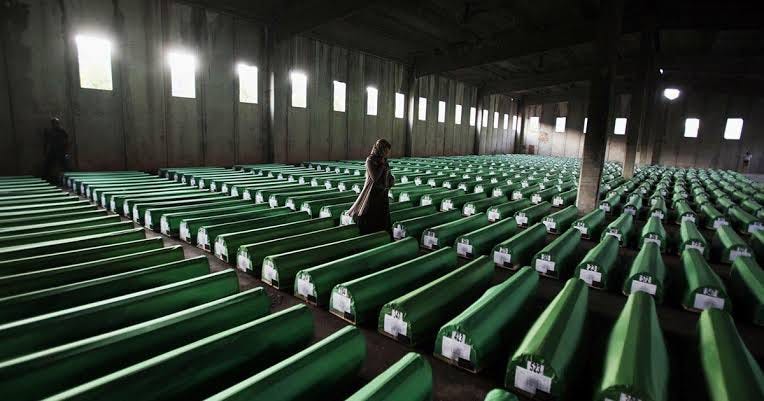
This sentence may sound severe at first, but it is true: A people that remembers only its pain but does not build its strength leaves its future to the mercy of others.
Bosniaks should not accept that.
To truly remember Srebrenica is not only to mourn the past, but also to build the possibilities of the future. Better schools, stronger families, more ethical trade, more serious institutions, more disciplined youth, a cleaner language, deeper culture and a stronger economic position. All of these belong to the same matter.
Standing upright does not mean shouting. It means living without turning one’s identity into a bargaining chip; carrying pain without turning it into performance; building the future without forgetting the past; becoming strong without becoming cruel; not becoming crushed when wronged; remaining open to the world without losing one’s roots.
The feeling given to a Bosniak child after Srebrenica should not be only grief. Alongside grief, there must be dignity. Strength. Belonging. It is not enough to say, “You are the grandchild of victims.” One must also say, “You are the grandchild of those who remained standing.” One must say, “Your duty is not only to cry, but to learn, work, produce, protect, tell the truth and stand stronger.”
That is how memory lives.
Not only on a gravestone, but in a child’s character. Not only at a ceremony, but in work ethic. Not only in prayer, but in school, books, production, family, language and daily behaviour. A people’s origin can only be protected like that. Not by placing it in a museum, but by carrying it inside life.
That is why July 11 is not only a day of mourning. It is a measure.
Bosniaks should ask themselves this question today: Will we be a people that remembers Srebrenica once a year, or a people that carries the responsibility it placed upon us every day of the year?
The answer will not be found in speeches. It will be seen in what children learn. In what families speak about. In what dreams young people build. In whether businesspeople work only for themselves, or also for the future of their people. In how serious institutions become, how much people trust one another, and how alive memory remains.
Srebrenica must not be forgotten.
But not forgetting is not enough.
Srebrenica is a heavy trust that reminds Bosniaks who they are, what they must not lose and what they must rebuild.
To carry that trust means not staying silent, not scattering, not losing one’s roots, not consuming one another, teaching children the truth, becoming economically stronger and living with an upright head.
Because when a people’s memory remains strong, its future does not easily fall into the hands of others.
On July 11, silence is necessary.
But that silence should not be the silence of weakness.
It should be the heavy and dignified silence of a people that knows its roots, remembers its pain and is determined to build its future.
Follow on:
Substack | LinkedIn | Instagram | Threads | X | Reddit | Facebook | Bluesky | NSosyal