
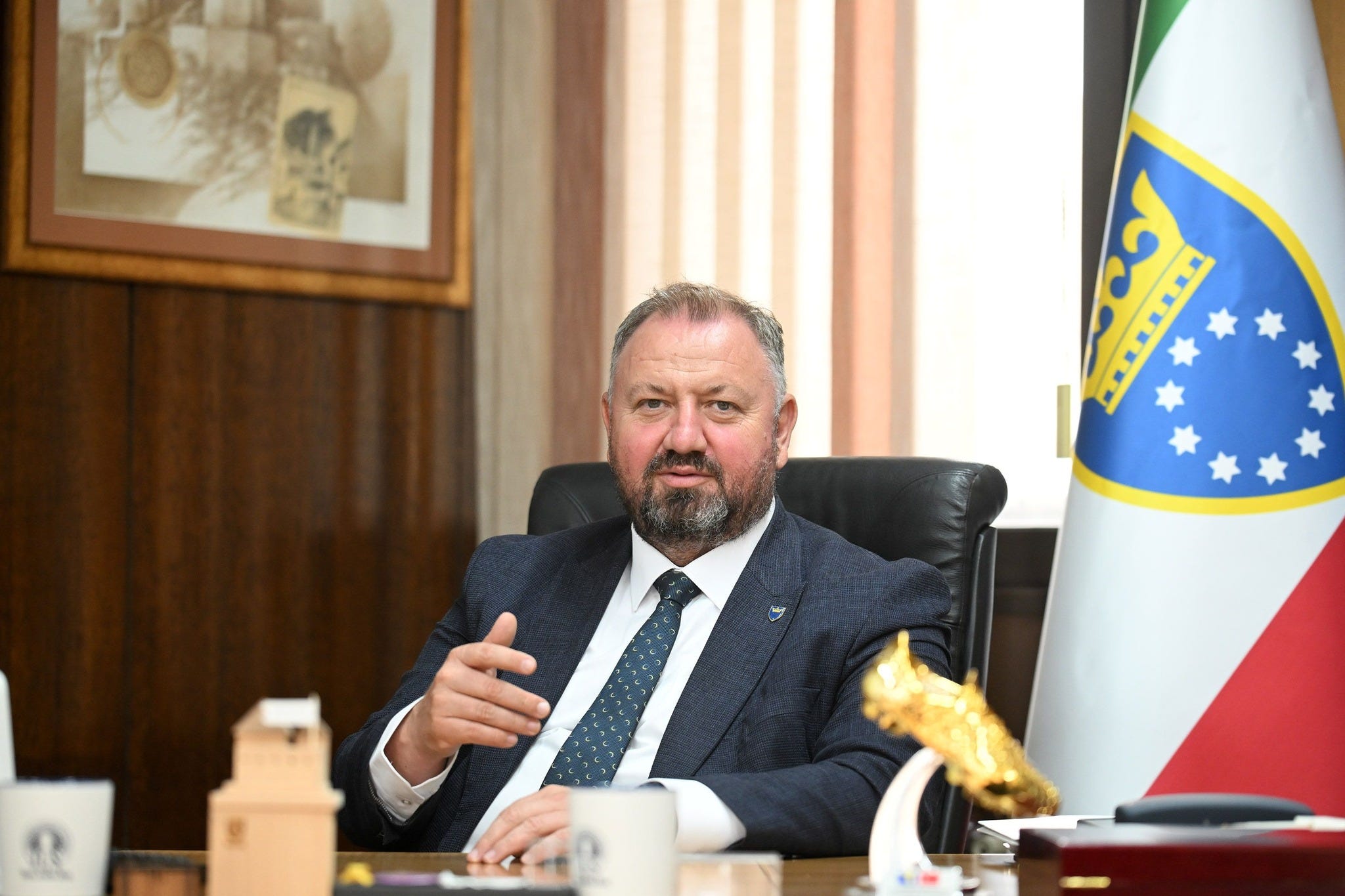
When I left today’s meeting with Samir Šibonjić, Minister of Economy of Zenica-Doboj Canton, I was not thinking only about the usual notes from an official meeting. I was thinking about another face of Bosnia and Herzegovina, one that is often missed from the outside: a country that works, produces, tries to renew itself and does not want to leave its future only to the narrow space of political debate.
Bosnia and Herzegovina is usually described through three themes: history, politics and tourism. All three matter. But when the country is reduced to those three themes, something else disappears: its production memory. Factory discipline. Technical people. Industrial habits. Export reflexes. A location that can look toward Central Europe, the Adriatic and the internal Balkan market at the same time.
In that sense, Zenica-Doboj is not an ordinary canton. To me, it feels less like Bosnia and Herzegovina’s display window and more like its workshop. The display window may be brighter, but the workshop is often where the work actually gets done.
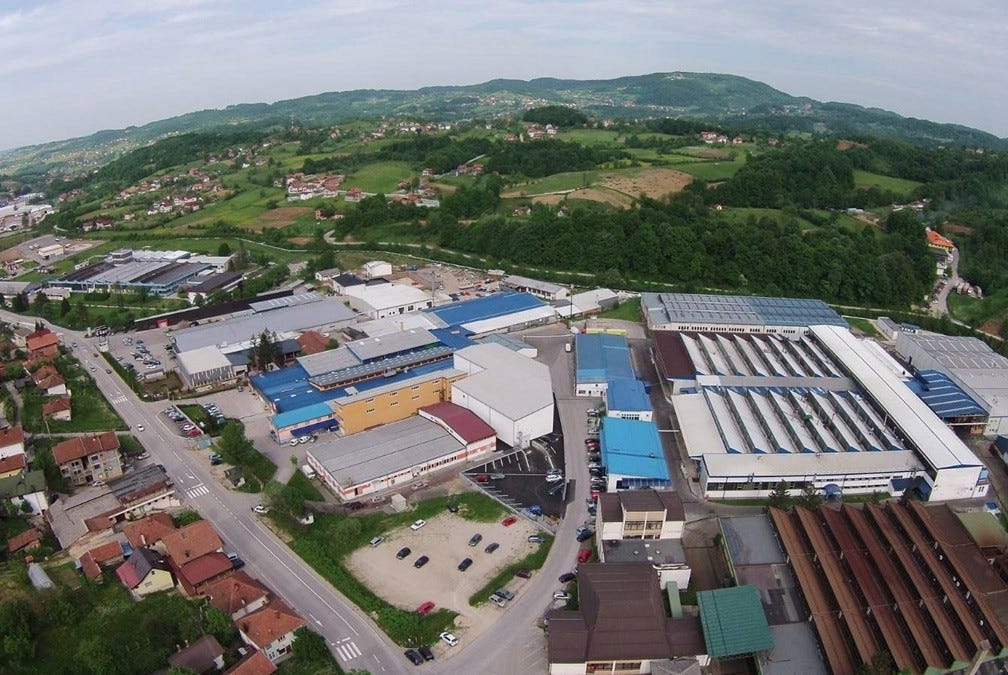
This is not just a pleasant metaphor. In 2024, Zenica-Doboj Canton recorded exports of around 2.126 billion KM and imports of around 2.194 billion KM, with export coverage of imports reaching 96.9%. In the same year, manufacturing exports were recorded at around 1.935 billion KM. In a country where trade balance is a sensitive issue, these are not small figures to leave in the margin. They say something about the character of the region.
That is why it would be incomplete to see Zenica-Doboj only as a region waiting for investment. This is already a working, producing and exporting region. For investors, the first distinction begins there. When looking at a location, empty land, labour cost and incentive language are not enough. You have to look at the work memory of the place.
Do people understand production? Orders? Delivery? Quality standards? Export customers? Are these real field words, or only presentation words? Zenica-Doboj’s advantage is exactly here. The canton is not trying to learn industry from zero. It comes from industry.
What interested me most in today’s conversation was this: can that production memory meet new technology?
Old industry and new technology are often presented as strangers. But if designed properly, they can complete each other. A technology centre without factory memory can remain abstract. Industry without technology can become too dependent on the past. Zenica-Doboj’s opportunity is to bring both to the same table.
Zenica-Doboj’s real opportunity is to make old industry and new technology two parts of the same story, not rivals.
There are concrete steps in that direction. According to official announcements related to the ZDK Government’s 2026 IT/AI hub decision, IT/AI hubs have been established in Zenica, Zavidovići and Maglaj, a new hub is planned in Kakanj, and the aim is to spread access to digital resources, knowledge and 21st-century business opportunities across the canton. The same announcements describe these spaces as gathering points for young professionals, freelancers and IT/AI companies, as well as venues for education, mentorship and business networking.
The canton and REZ Agency also allocated 105,000 KM in 2026 for adult education aimed at the needs of the IT/AI labour market. That amount does not change the world by itself. But it shows the direction of intent: technology is being approached not only as conference language, but as part of workforce transformation.
More importantly, the matter is not only about teaching young people to code. Public-sector digital transformation is also on the table. A July 15, 2026 official announcement highlighted the strengthening of digital competencies among employees in public administration and the economy, the training of civil servants to use information technologies and AI-based tools in daily work, and the goal of building more efficient public processes.
This should not be underestimated. In the Balkans, the investment climate is shaped not only by land, tax or labour cost. Bureaucratic speed is also investment. How long a file waits, how traceable a process is and how well public institutions use digital tools can directly affect an investor’s decision.

My impression from today’s meeting was that, at least in some areas, Zenica-Doboj has less of a “wait and see” attitude and more of a “how can we make this move faster?” attitude. In a country with a complex administrative structure like Bosnia and Herzegovina, that is not a small difference. Sometimes what grows an investment idea is not only an incentive, but the speed at which the counterpart takes the subject seriously.
Zenica-Doboj does not need to be described through oversized city slogans. Its strength is not in a shiny urban image, but in production memory, logistics, industrial zones, fair culture and the will to open itself to technology.
This is why Zenica-Doboj is better read as a new production and technology gateway in the Balkans.
If we look for a successful global reference, the better comparison is not a spectacle-driven city model, but the Brainport line around Eindhoven. Brainport Eindhoven is described as one of Europe’s strong innovation regions, where public authorities, industry and knowledge institutions work closely together and where industrial heritage is combined with high technology and a culture of joint investment.
Of course, Zenica-Doboj is not claiming to be Brainport today. But if it moves in the right direction, it can become a Balkan-scale investment corridor that connects production culture with technology centres, incubation structures, industrial zones, fair economics and more digital public processes. The benefit for the canton would not be only more capital. It would mean better-quality jobs, stronger ability to keep young talent in the region, higher value-added production and a more credible economic story for international investors.
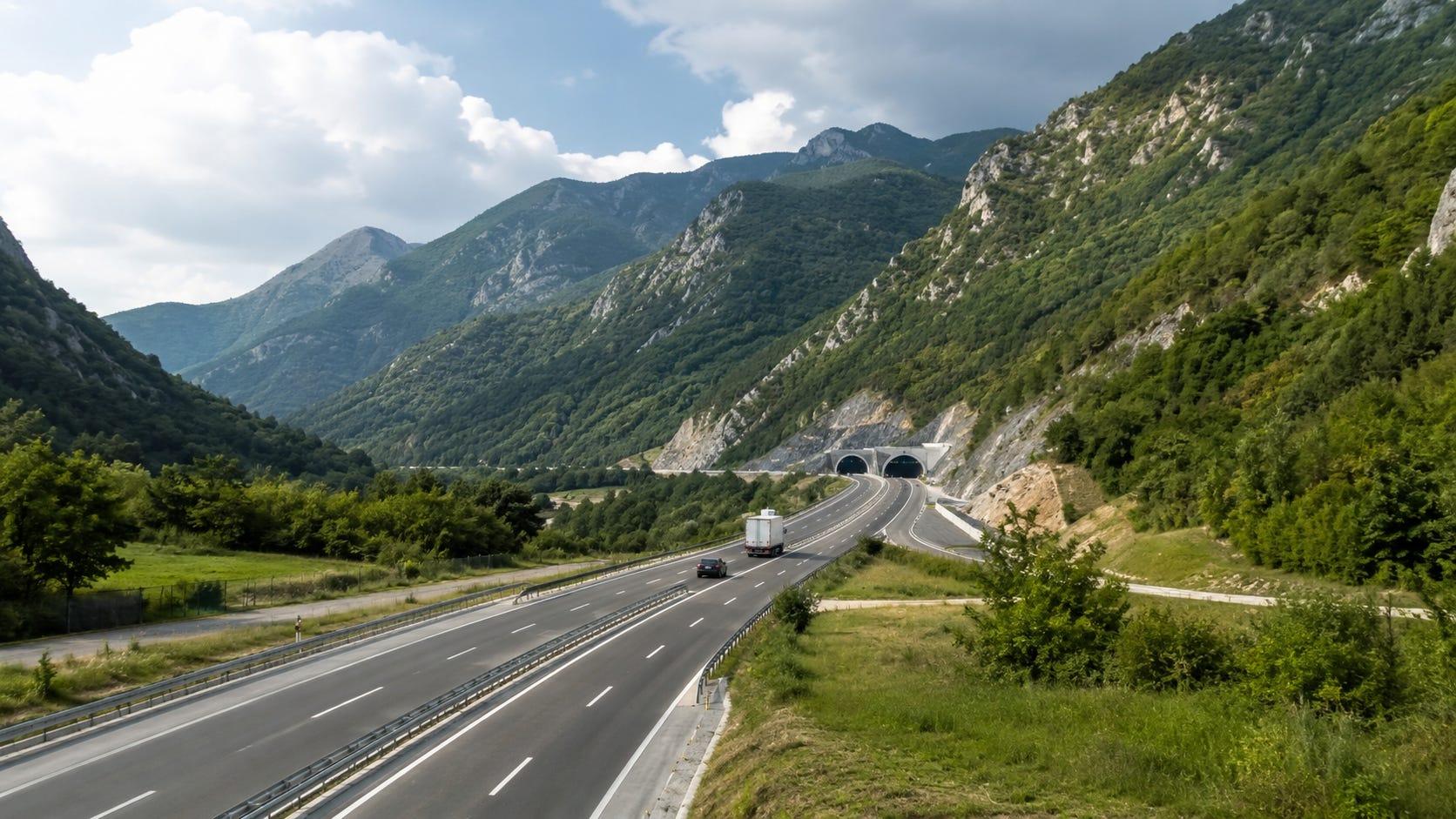
Location matters here. Corridor Vc is described as a major north-south route starting in Budapest, passing through Osijek and Bosnia and Herzegovina via Doboj, Zenica, Sarajevo and Mostar, and ending at the Croatian port of Ploče.
A road is not only a road. Sometimes it is the physical form of economic intention. When a place is connected, it is not only vehicles that move. Capital, customers, suppliers, fairs, labour and time move as well. This is why Zenica-Doboj can become increasingly relevant for companies seeking near-European production, investors looking for more agile industrial infrastructure in the Balkans and Gulf capital searching for understandable, secure growth locations.
The point is not to look at the canton through the perspective of one country. Existing trade links and cultural familiarity with Türkiye add a natural advantage, but Zenica-Doboj’s potential is broader than that. Its real value lies in the possibility of becoming a functional connection point among the European market, the Balkan production line, the Adriatic route, Central European logistics, Gulf capital and regional trade networks.
The renewed strength of ZEPS matters in the same context. ZEPS 2026 will be held in Zenica from September 2 to 5, 2026, and B2B meetings are planned as part of the fair to help participants find new customers, suppliers, partners and investment contacts from the Western Balkans and beyond. The platform covers areas such as sales, representation, technology transfer, research and development, joint investment and finance.
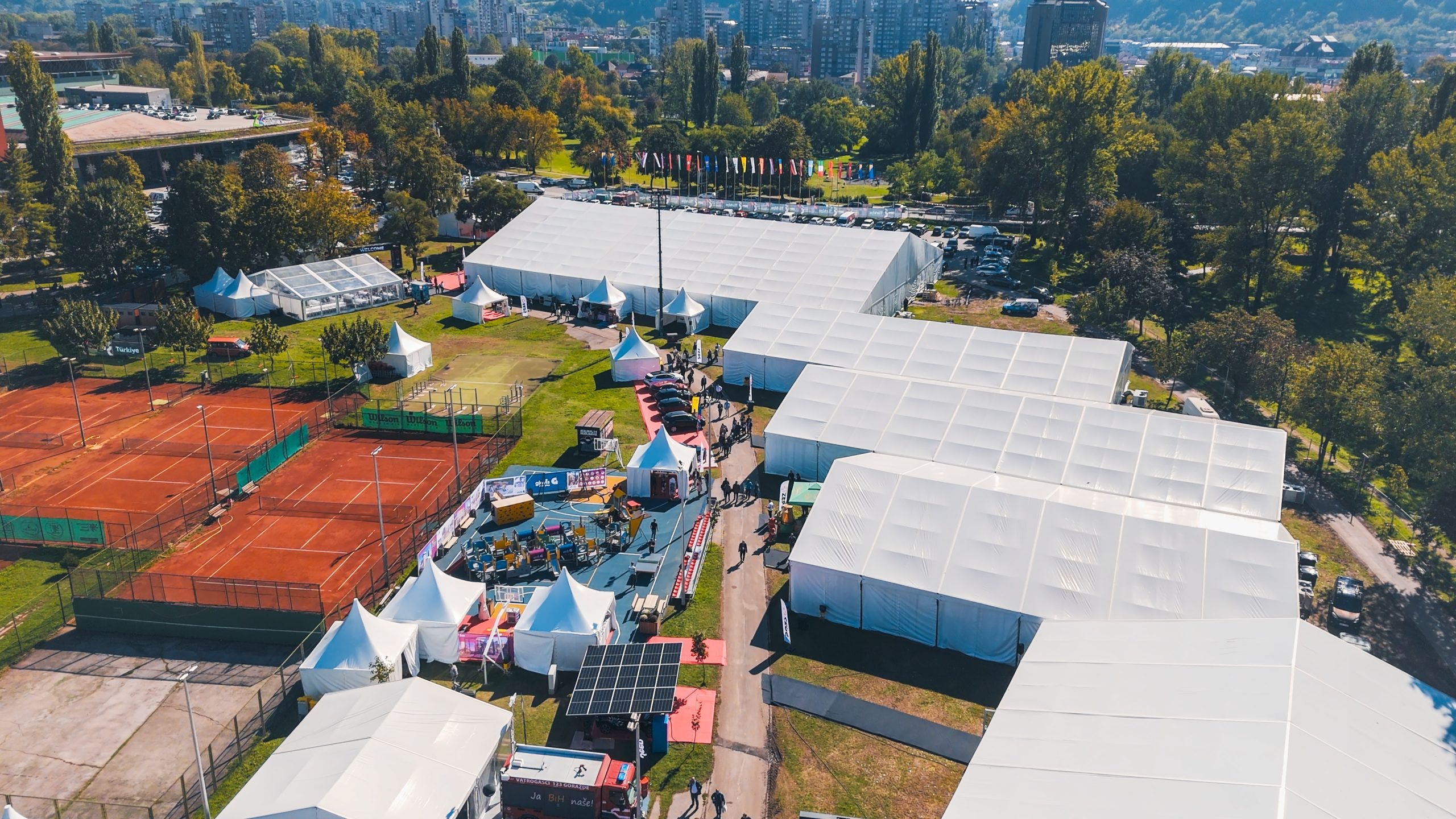
A fair does not create an economy by itself. But when it is built at the right time, in the right city, on top of real industrial memory, it creates a valuable question in an investor’s mind: “Is something moving here?”
After today’s meeting, my answer is: yes, something is moving. But its value will depend on whether that movement becomes a system rather than a show.
Industrial zones are another part of that system. Official statements note that there are 22 industrial zones in ZDK and that the government aims to build infrastructure for existing companies while creating better preconditions for new investors.
Tourism should not be ignored either. Zenica-Doboj is not usually presented as a classic tourism destination at first glance. That is exactly why its potential is interesting. Its mountains, rivers, rural routes, health and nature-tourism possibilities can be packaged more consciously for European and Gulf visitors. Federal statistics show that foreign tourist overnight stays increased from 24,513 in 2021 to 55,634 in 2024.
For Gulf capital, the attractiveness of a region is not only in the investment file. It also matters whether the place feels reachable, safe, culturally understandable and suitable for family travel and longer-term engagement. Zenica-Doboj’s future is therefore not only a factory, fair and road story. It can also become a livable investment-region story.
Bosnia and Herzegovina has long been described from the outside mostly through its problems. Those problems should not be denied. But reducing a country to its problems is another kind of unfairness. Places like Zenica-Doboj show a different Bosnia and Herzegovina: one that works, thinks, produces and remains open to renewal.
That was the clearest feeling I took from today’s meeting: there is another Bosnia and Herzegovina waiting to be told. Less touristic, less romantic, less political; but more productive, more concrete and more investable.
Whether this story succeeds will depend on several things. Will industrial zones become truly investor-friendly infrastructure? Will IT/AI centres connect with industry? Will digitalisation and AI training inside public institutions increase the speed of daily government work? Will ZEPS be crowded only during fair days, or become a year-round platform for commercial relationships? Will international investors see the region only as “low cost,” or as a new connection point among production, technology and logistics?
The answers will become clear over time. But one thing can already be said: Zenica-Doboj Canton is not a side note for anyone who wants to speak seriously about the future of Bosnia and Herzegovina.
It may look small on the map. But with its industrial memory, its position on a European route, its public-sector digitalisation preparations, its IT/AI steps, its fair culture and its potential to open toward international investment circles, it deserves a closer look.
Sometimes the future of a country is not visible in the grand sentences of the capital, but in the quieter and more concrete preparation of its industrial cities.
Today, Zenica-Doboj showed me a little of that.
Source note
The economic data and institutional references in this essay are based on recent public statistics, official announcements from Zenica-Doboj Canton, ZEPS 2026 information and publicly available material from Brainport Eindhoven.
Follow on:
Substack | LinkedIn | Instagram | Threads | X | Reddit | Facebook | Bluesky | NSosyal